Why the Eucharist Is the Source and Summit of Our Christian Faith (CCC 1322-1419)
The Eucharist stands at the very heart of the Church because everything we are and everything we hope for flows from Christ, and in the Eucharist, Christ Himself is truly present. The Catechism says, “The Eucharist is the source and summit of the Christian life” (CCC 1324), not simply because it is one sacrament among many, but because it contains the whole spiritual good of the Church—Christ Himself.
Every sacrament gives us grace, but the Eucharist gives us the Giver of grace. Baptism unites us to Christ; Confirmation strengthens us; Penance heals us. But in the Eucharist, Christ does not merely touch us—He gives us His Body and Blood as food, fulfilling His promise: “He who eats My flesh and drinks My blood abides in Me and I in him” (Jn 6:56).
In the Mass, the one sacrifice of Calvary is made present (CCC 1367). We are not spectators of a symbolic ritual; we are participants in the saving act of Christ. That is why the Eucharist is called “the sacrament of love, unity, and charity” (CCC 1323). It is here that our fragmented lives are gathered and offered with the bread and wine, which become the Body of Christ through transubstantiation—the miraculous change of substance taught solemnly by the Church (CCC 1376).
From the Eucharist, the Church draws her life; to the Eucharist, all her worship and mission return. Our works of mercy, our evangelization, our prayer, our service, our sacrifices—all find their meaning and strength in Holy Communion. Pope Benedict XVI wrote, “The Eucharist is the love that transforms us and makes us capable of giving love” (Sacramentum Caritatis).
Thus the Eucharist is not merely an important devotion; it is the beating heart of Christianity. It is Christ with us, Christ for us, and Christ in us.
Why Creation Matters in Christian Faith (CCC 279–324)
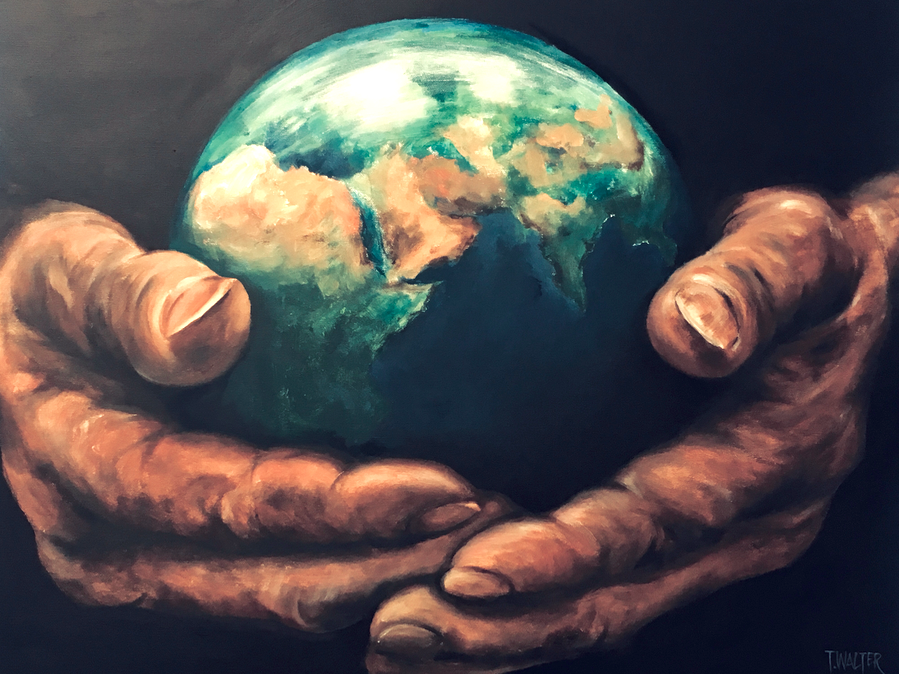
The doctrine of creation is not abstract theology—it is the beginning of the Gospel, the first expression of God’s love story with humanity. The Catechism teaches that God created the world freely, out of nothing, and out of sheer goodness (CCC 296). Creation is not an accident of nature or the result of blind forces; it is a deliberate gift. Every leaf, every star, every breath is a sign of the Creator’s generosity.
Creation reveals God’s order, beauty, and wisdom (CCC 299). When we contemplate the world, we encounter the fingerprints of its Maker. The Psalmist proclaims, “The heavens declare the glory of God” (Ps 19:1). Nature becomes the first catechism, teaching us awe, humility, and gratitude.
But creation is not simply “out there.” The dignity of the human person stands at the center of God’s work. The Catechism emphasizes that we are made in the image and likeness of God and entrusted with the vocation of stewardship—not domination (CCC 373). We are caretakers, not owners. We are meant to cultivate creation and protect its harmony.
Providence—God’s loving governance—continues to guide creation toward its ultimate goal (CCC 302–314). Even when suffering or evil appear, the Catechism assures us that God can draw good from every tragedy (CCC 311). Creation, wounded by sin, longs for the redemption Christ brings (Rom 8:19–23).
To believe in creation is to believe in a God who is near, generous, and wise. It grounds our ecological responsibility, our respect for the human person, and our hope in the new creation Christ promises. As Pope Francis reminds us in Laudato Si’, “The world is not a problem to be solved, but a joyful mystery to be contemplated with gladness and praise.”
Church Documents Related to Revival
Documents affirming Eucharistic renewal, liturgical depth, and spiritual revival:
• Council of Trent – Dogmatic teaching on Real Presence & transubstantiation.
• Mediator Dei (Pius XII) – Foundational teaching on liturgy.
• Mysterium Fidei (Paul VI) – Defense of the Eucharist against symbolic reductionism.
• Sacrosanctum Concilium (Vatican II) – Liturgy as the summit and source of Church life.
• Lumen Gentium – The Church is born from the Eucharist.
• Ecclesia de Eucharistia (John Paul II) – The Eucharist builds the Church.
• Sacramentum Caritatis (Benedict XVI) – The Eucharist as love made visible.
• Desiderio Desideravi (Francis) – Liturgical formation for the whole People of God.
• Laudato Si’ – Ecological vision rooted in Eucharistic spirituality.
Quick Links to Major Magisterials
Faith & Love:
• Deus Caritas Est — God is love.
• Redemptor Hominis — Christ reveals humanity to itself.
Social Doctrine:
• Rerum Novarum, Quadragesimo Anno, Centesimus Annus, Fratelli Tutti — social justice & solidarity.
• Caritas in Veritate — integral human development.
Creation & Ecology:
• Laudato Si’ — care for creation, integral ecology.
Life & Morality:
• Evangelium Vitae — dignity of life.
• Veritatis Splendor — moral foundations.